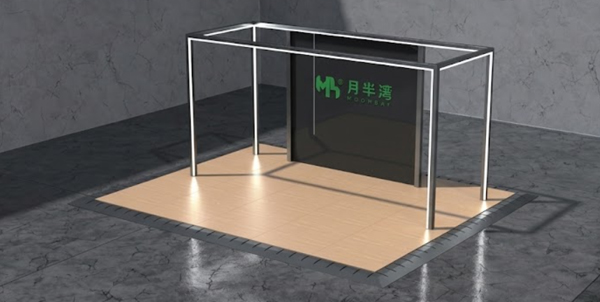
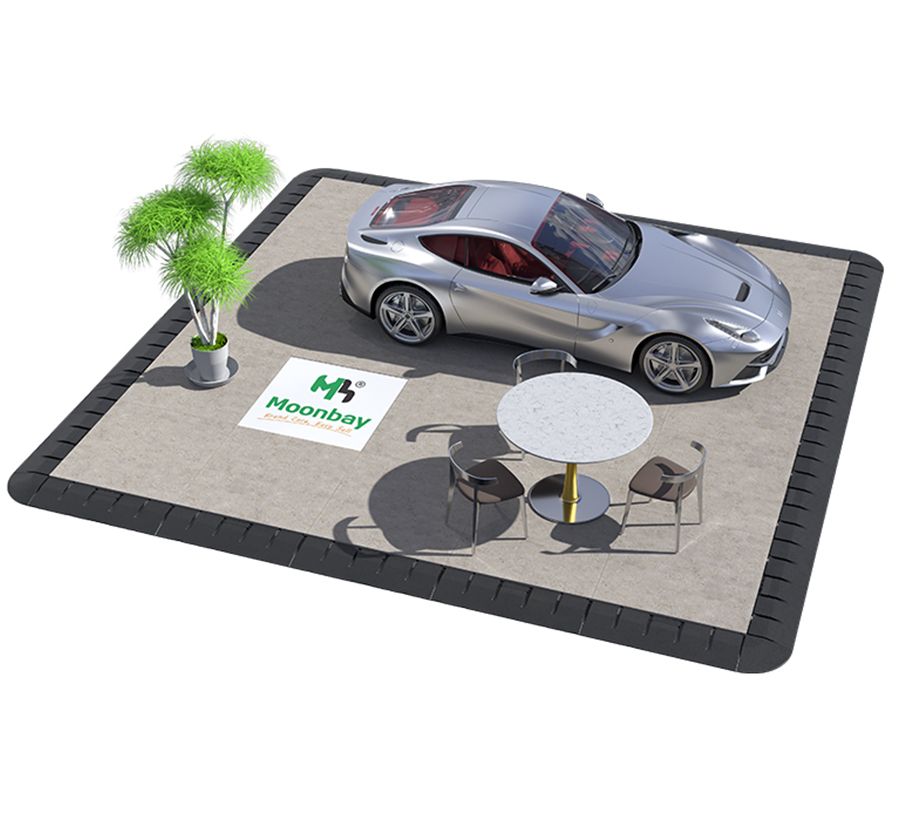

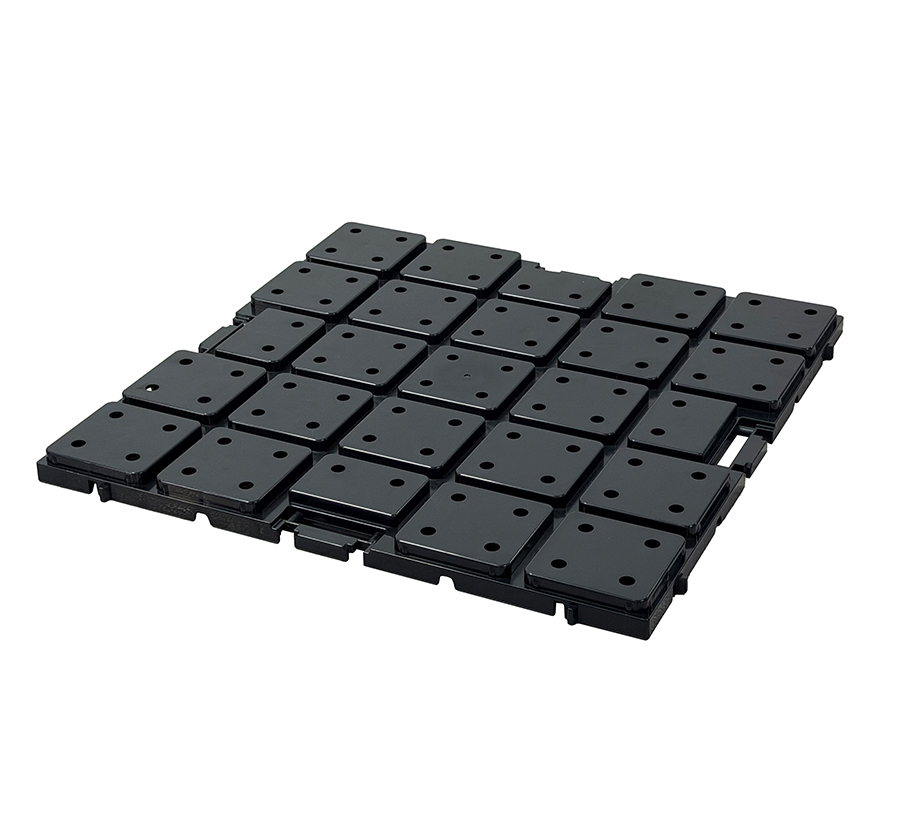
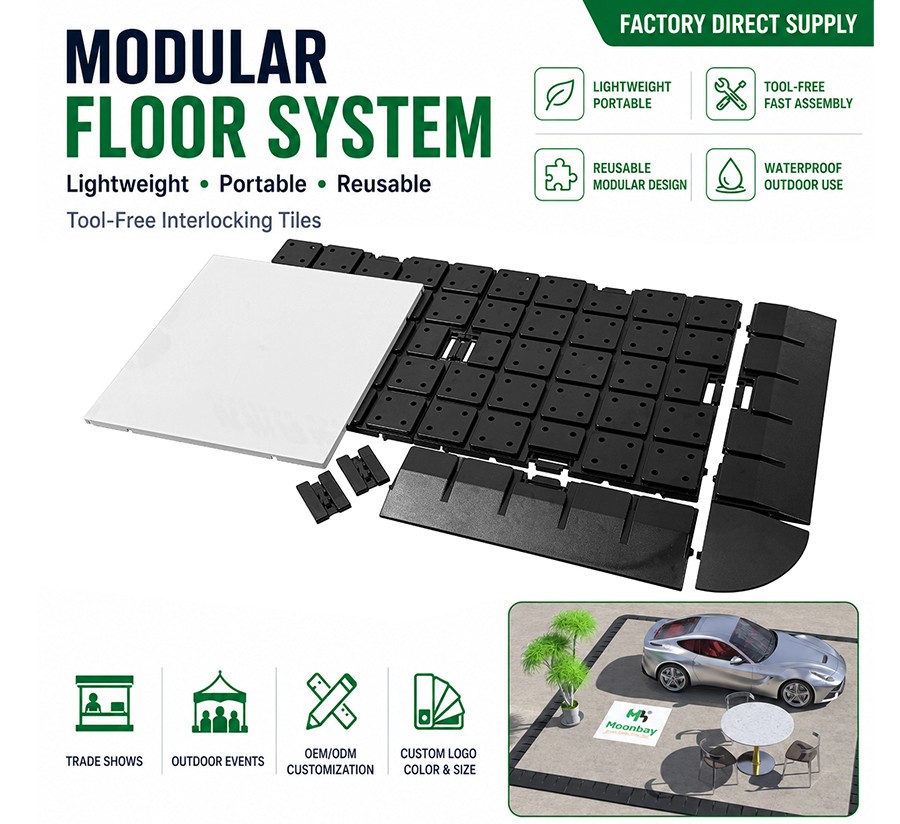
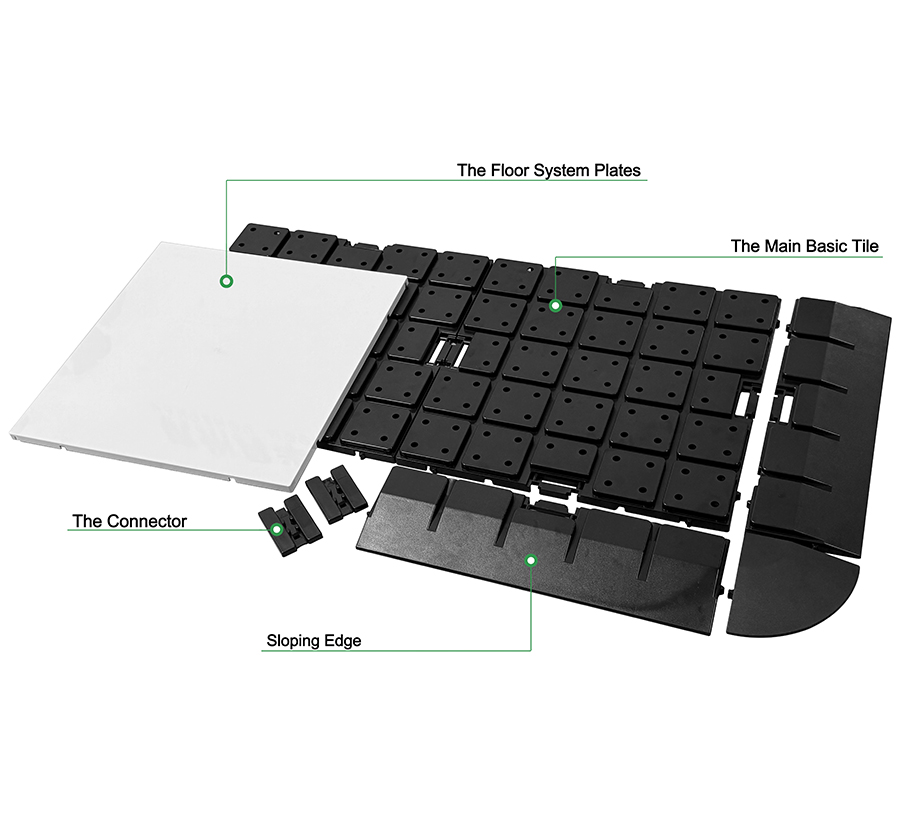
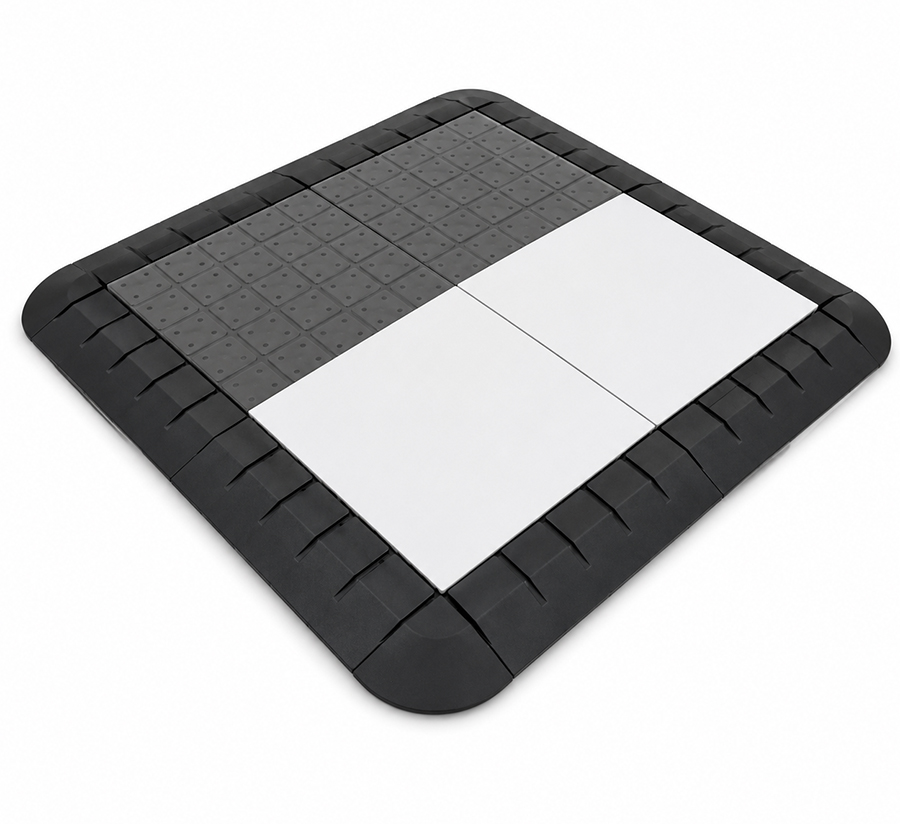

The Moonbay Modular Raised Flooring System is an interlocking elevated floor platform designed for temporary commercial displays

● PRODUCT PARAMETERS
| Parameter | Specification |
| Product Name | Smart Modular Floor System |
| Material | High-strength PP composite + reinforced rib structure |
| Dimensions | Modular interlocking tiles |
| Load Capacity | Strong structural support for pedestrian and light equipment use |
| Surface Finish | Anti-slip texture with ventilation & drainage slots |
| Installation Method | Tool-free interlocking system |
| Weather Resistance | Waterproof, UV-resistant, suitable for indoor/outdoor use |
| Colour Options | Standard grey/black; custom colours optional |
| Application Areas | Exhibitions, trade shows, outdoor events, balconies, gardens, pop-up stores, temporary flooring |
● KEY ADVANTAGES
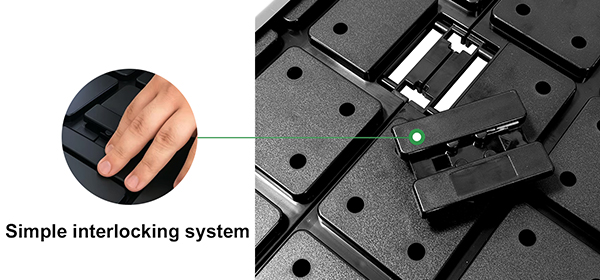 | Quick & Tool-Free Installation Tool-Free Assembly with Instant Self-Locking Featuring a push-to-lock connector, this lightweight ABS modular floor installs tool-free at 1 m² per minute by a single person. The snap-fit joints provide wobble-free stability for heavy foot traffic and vehicle displays, making it ideal for trade shows and pop-up stores. |
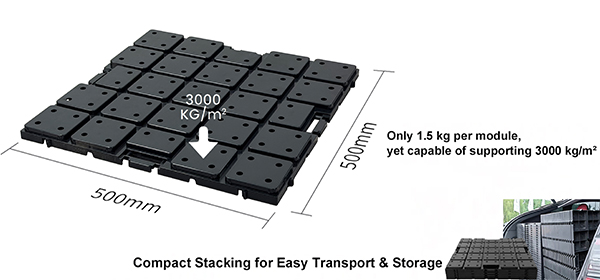 | Heavy Load, Low Weight 3,000 kg/m² Capacity, 1.5 kg per Tile Reinforced flame-retardant ABS modules weigh only 1.5 kg yet bear 3,000 kg/m², delivering a lightweight, deformation-free elevated base for car displays and heavy exhibition booths. |
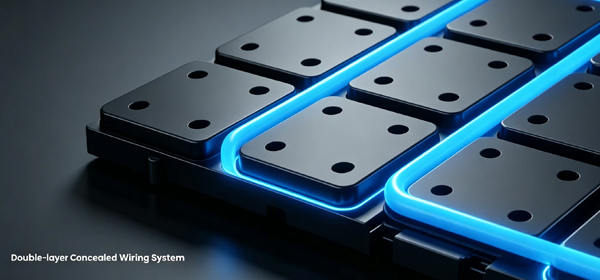 | Double-Layer Concealed Wiring System The double-layer base structure hides electrical cables, hoses, network wires, and water lines. Multiple preset outlet positions allow flexible routing while keeping the floor surface clean and safe. |
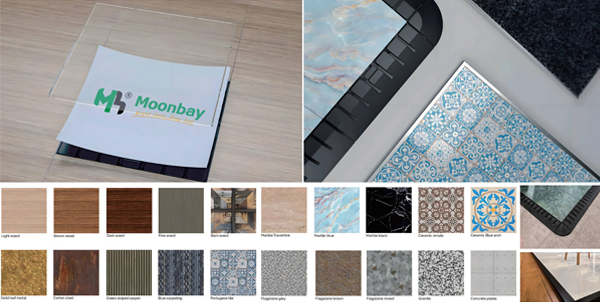 | Multiple Surface Covering Options Compatible with various coverings such as marble pattern, wood grain, carpet, PVC, and custom prints. Suitable for exhibitions, retail stores, events, and commercial setups. |
● SUITABLE APPLICATIONS
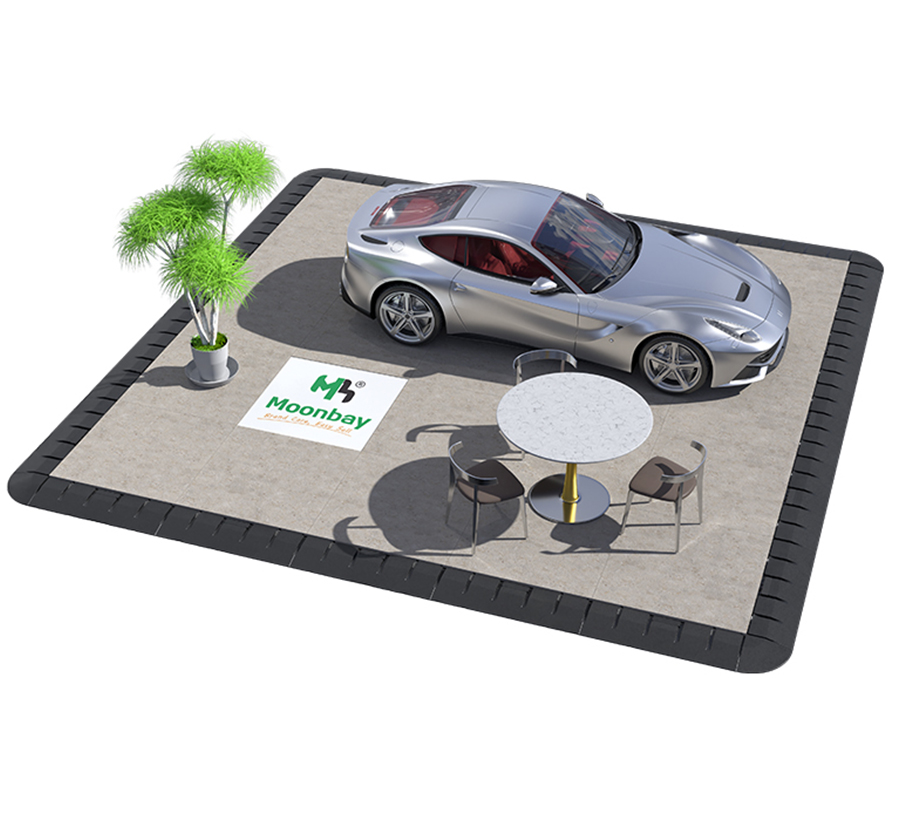
Mall Atrium Car Displays Provides a heavy-duty, tool-free raised platform to safely showcase electric vehicles and conceal power cables in high-traffic shopping mall atriums without damaging existing floors. |
Exhibition Booths & Pop-Up Displays Creates a professional, reusable elevated floor platform to conceal lighting wires and set up modular exhibition stands or pop-up retail displays in minutes without tools. |
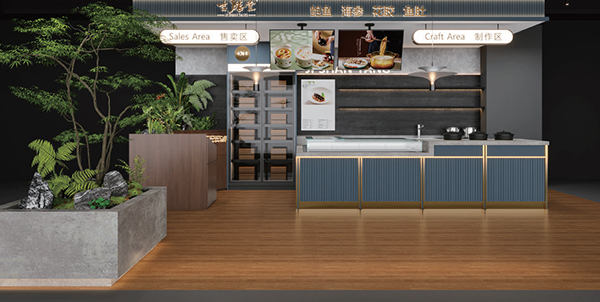
Retail Pop-Up Stores & Food Kiosks Provides a rapid-assembly raised platform to conceal plumbing and high-power electrical cables for commercial retail pop-up shops, culinary display booths, and interactive tasting areas without floor trenching. |
Automotive Trade Shows & Brand Pop-Ups Delivers a high-capacity, reusable raised floor system engineered to support multi-vehicle displays and conceal complex AV and power cabling in large exhibition halls and auto shows. |
● SELECTION NOTE
Modular floor model, base height, and ramp accessories should be selected according to project load, finished floor height, surface finish, and cable diameter.
For vehicle displays, sloped substrates, or perimeter lighting, high-load modules, leveling shims, and LED ramp profiles should be confirmed before installation.
The Moonbay Modular Raised Flooring System is an interlocking elevated floor platform designed for temporary and semi-permanent commercial display installations.
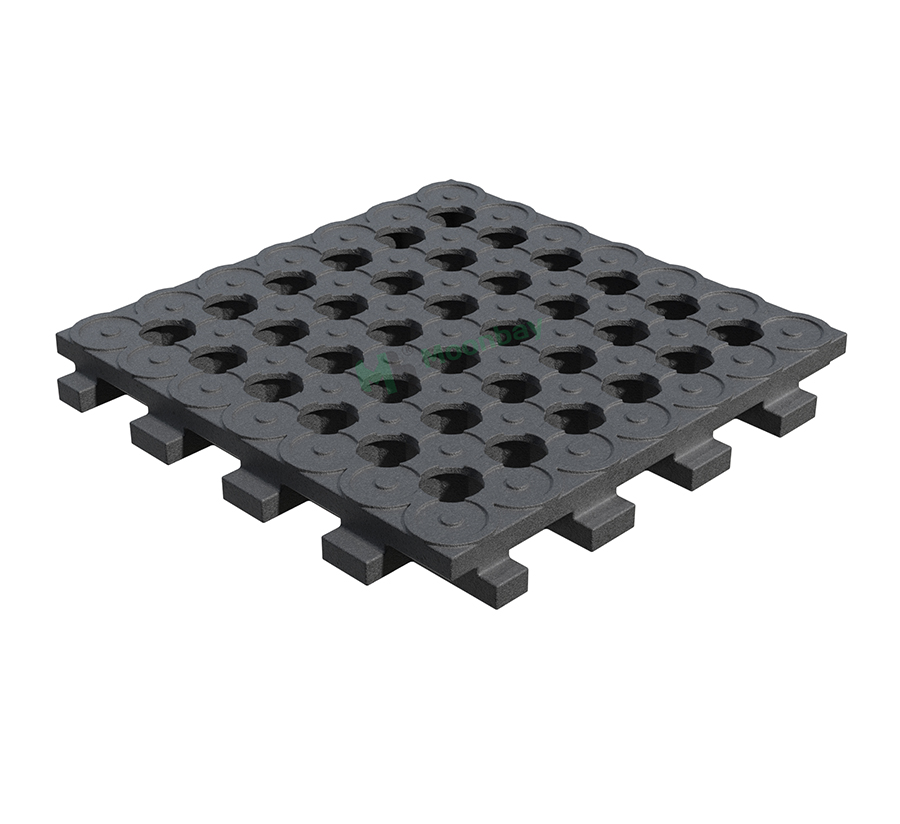
The Horse Paddock Mud Control Grid is an interlocking ground reinforcement system for creating stable, well-drained surfaces in muddy, high-traffic areas.
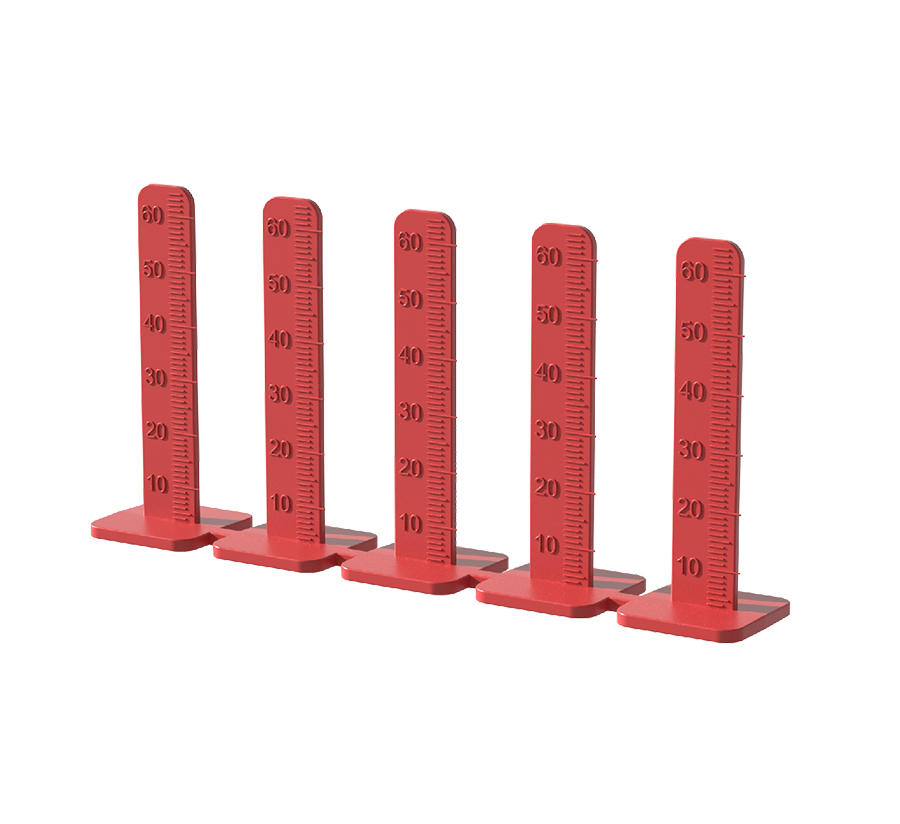
The Leveling Pin is a plastic height control tool for floor leveling and screeding applications. It is used as a visual reference point on uneven concrete substrates to control the required leveling t

Aluminum alloy outdoor flooring is manufactured using a new production process.

The mud control grid for use around stable developments and exhibition areas.

In order to prevent leaks, unwelcome humidity, and splash, Atlantic Waterwall Spillways are a special back-angled spout that directs water downward and onto the wall below the plumbing connection.

This system replaces traditional drainage methods by guiding rainwater through initial filtration in rainwater wells. A portion of the water is then stored in underground tanks for reuse in irrigatio

Moonbay Drainage Cells are modular plastic units with a honeycomb-like structure, designed to support high surface loads. They can be assembled into underground systems for drainage and stormwater m

Shield your floors with Moobay Self-Adhesive Floor Protection Film. Ideal for construction sites, renovations, moving,and painting, this durable plastic film ensures your floors stay clean and undamag

The Turf Protection Mats, often used for temporary flooring, outdoor events, or construction sites. The hexagonal and interlocking design ensures stability, durability, and efficient load distribution

Sloped green roofs are extremely attractive and highly visible from the ground, however they have unique challenges and need to deal with erosion and shear forces due to gravity.

The prefabricated plastic construction formwork uses PP polypropylene as the base material and glass fiber For reinforced composite materials, the molding production process is widely used in construc

Moonbay Plastic Grease Trap is a durable and lightweight solution designed to effectively separate grease, fats, and food residues from wastewater in commercial kitchens, restaurants, and food prepara

Stainless Steel Grease Trap is a device used in commercial kitchens, restaurants, food processing facilities, and other food service environments to efficiently capture fats, oils, and grease (FOG) be

The Industrial Floor Drain is designed to efficiently manage water drainage in high-traffic and heavy-duty environments. Made of food hygiene grade 304 stainless steel, it provides superior corrosion

The Industrial Floor Drain provide the most cleanable and sanitary drainage solution for environments with strict hygiene requirements.

Plastic Catch Basin is a lightweight, durable drainage solution used to collect surface water and direct it into drainage systems, preventing water pooling and erosion.


Mobile/WhatsApp:+ 86 176 8231 3725
ADD:Room B205, Cross-Border E-Commerce Comprehensive Pilot Area, No. 776 Jianshe 1st Road, Xiaoshan District, Hangzhou Zhejiang, China


Copyright: Hangzhou Moonbay Industrial Co., Ltd. @ 2021 record Technical support: xuanmeng network
 Home
Home